NORTH WALES COAST
RAILWAY :NOTICE BOARD
Rheilffordd arfordir gogledd Cymru: Hysbysfwrdd
16 March 2026
Next Update:
30 March




Forthcoming events
See our Calendar Page for operator details.
April 2026
Thursday 2 April Clwyd Railway Circle David Parry 'Swiss Rack Railways'
Thursday 9 April Statesman Rail "Royal Windsor Statesman", Chester, Wrexham General, Ruabon, Chirk to Windsor & Eton Riverside. LSL 47 or 57s.
April 11 April: UK Railtours. "The Not Holyhead" tour. Derby to North Wales with rare track etc.
Hanson and Hall's loco 50 008 'Thunderer' was one of two class 50's due to haul on this tour but it failed on an earlier tour . It is not known whether the tour will continue.
Friday 17 April Vintage Trains "The Cambrian Coast Express", Widney Manor to Pwllheli. Diesel hauled by 37240 to/from Shrewsbury, then double headed with a Network Rail 97/3 to Pwllheli.
May 2026
Monday 4 May Intercity/LSL "The Positioning Move". Crewe to Holyhead (and return). 45118 'The Royal Artilleryman'
Monday 4 May Intercity/LSL "The Baywatch Merrymaker" Holyhead to Scarborough (and return). 45118 'The Royal Artilleryman'
Saturday 2 May 125 Group London Euston to Llandudno, with mini tour around North Wales TBC. 125 Group TBC.
Saturday 2 May Vintage Trains "The North Wales Coast Express", Birmingham New Street to Llandudno. Diesel hauled Chester to Llandudno, steam back from Llandudno to Nuneaton. Vintage Trains pool.
June 2026
Saturday 6 June
Railway Touring Company London Euston to Aberystwyth. WCRC 47/57 to Shrewsbury, two Network Rail 97s or one 97 and one WCRC 37 to Aberystwyth.

Saturday 13 June North West Rail and Transport Collectors Fair
July 2026
Saltburn Railtours
3-6 July tour Saltburn to Llandudno, Three days' hotel accommodation with breakfast.
August 2026
Saturday 15 August
Railway Touring Company Oxford to Blaenau Ffestiniog, WCRC diesels TBC
Wednesday 19 August Midland Pullman "Torbay Riviera Pullman", Chester, Wrexham General, Ruabon, Chirk to Torquay and Paignton. LSL Midland Pullman HST.
29-31 August 2026 Bala Lake Railway Steam Gala
September 2026
19-20 September Bala Model Railway Show
Thursday 3 September Clwyd Railway Circle To be announced
Saturday 19 September Northern Belle "Settle & Carlisle Steam Special", Wrexham General and Chester to Carlisle. WCRC steam locomotive over the Settle & Carlisle line. Diesel hauled otherwise.
October 2026
Thursday 1 October Clwyd Railway Circle To be announced
November 2026
Thursday 5 November Clwyd Railway Circle To be announced
December 2026
Thursday 3 December Clwyd Railway Circle Ian Mainprize 'German Railway Development'
Belmond have advertised their 2026 three-day Britannic Explorer trips to the sidings in Barmouth, start dates are: 30 March, 13 April, 4/11/25 May, 1/8/15/22/29 June, 6/20/27 July, 3/17/21/24 August, 14/28 September, 19 October and finally 9 November.
Other useful sites:
For up-to-date North Wales information
join the North Wales Trains News group
North Wales Coast Railway website created and compiled by Charlie Hulme
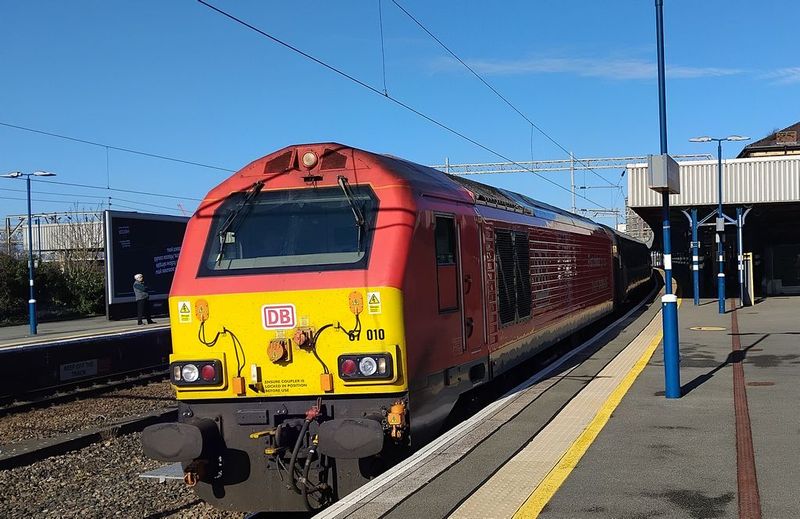
The sun is shining in Stockport as 67 010 pulls away with the 12:30 Manchester Piccadilly to Cardiff on 3 March.
Timetable Shuffle
Here is a brief look at the TfW North Wales timetable changes from 17 May:
Trains from Manchester Airport to Llandudno will now serve Holyhead instead, improving links to Northwest England and enhancing ferry connections to Ireland from Manchester.
The separate Wrexham - Chester and Chester - Crewe hourly services are being combined into one through service.
The Liverpool - Chester service will be extended to Llandudno, offering new direct travel opportunities.
The Birmingham - North Wales service (including from Birmingham International Airport) - currently every two hours - will operate to and from Llandudno Junction, not Holyhead.
A new service pattern will improve commuting options to Holyhead and Bangor, supporting local employment and economic growth.
Valley station will become a compulsory call on all relevant services, helping to give customers greater confidence in travelling from this stop. (Deganwy, Conwy, Llanfairfechan, Penmaenmawr and Llanfair PG have also become compulsory stops in recent times.)
The New Order - pictures by Greg Mape
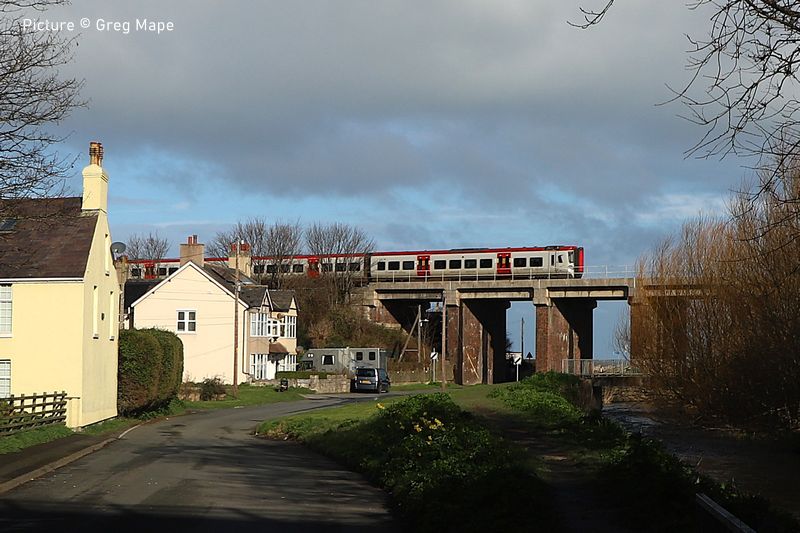
Two ';run of the mill' scenes on 13 March from Llanddulas (above) with 194 114 on the 08:42 Llandudno - Manchester Airport ...
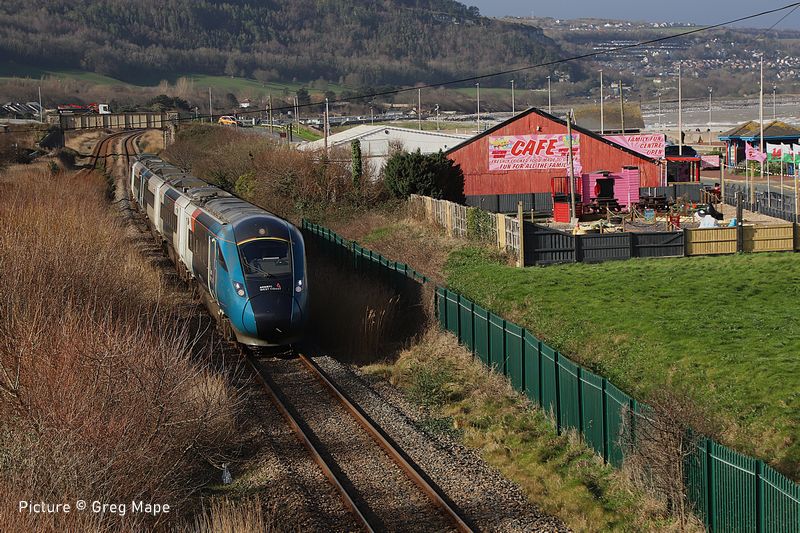
... and 805 003 passes Abergele with the 06:48 Holyhead - Euston.
Interesting excursions
A Branch Line Society / 225 Group railtour on 25 April will run from Holyhead to South Wales and back including some 'rare lines' including the 'Up and Down Main' lines, which rarely see passenger trains. The really interesting thing is that the train will consist of one of TfW's Class 67 locos / Mk4 coach set. Also, this excursion gives the rare opportunity to travel on a Mark 4 set between Chester and Crewe, in both directions, as the trains aren’t booked to do this in normal service. With only five coaches, it will surely be a sell-out and give a good amount for the Railway Children charity. The full information is in the BLS website.
Another tour worth mention here is on 17 April: the Vintage Trains company (for their first time) runs a 'Cambrian Coast Express' from Dorridge to Pwllheli and back, Traction will be 37 240 and from Shrewsbury a Network Rail 97/3. Passengers will also have an option to ride on the Talyllyn railway. Information on the Vintage website.
197 notes
197 003, which was delivered from the works at an early date to be a test-bed for the ECTS system, and has been stored at Machynlleth, was seen on 9 March working with 197 020 on
1D34 09:25 from Manchester Airport to Holyhead (Jon Veitch / Transport for Wales Enthusiasts Facebook). Is this a sign that all is well with the system and the 197s will soon running on the Cambrian? Not everyone is this change, with their fewer seats and poor riding, but it is inevitable as the 158s are very old.
On another topic, I hear that drivers have been complaining about the ECTS screen being to bright and with no electronic way to turn it down. It seems that this is a software error; when operating away from the Cambrian, with the ECTS not in use, they have this problem; when the system is in operation the driver can adjust the panel setting.
WSMR take 2?
A large delegation from Shropshire Chamber of Commerce travelled to London on 2 March to back calls for the return of a direct rail service from the county to the capital. Staff, directors, patrons and members joined more than 100 people on a special train commissioned by the Wrexham Shropshire & Midlands Railway (WSMR). This company is not connected by the previous company, which was sold to Deutsche Bundesbahn, who closed it down to use the stock elsewhere.
This new venture is supported by Alstom - a French company - who are known for building trains rather than operating them.
The train was joined along the route by local MPs, who presented petitions and letters of support to the doors of 10 Downing Street. The campaigners also raised a WSMR banner outside the Houses of Parliament during the trip to demonstrate the strength of support for the campaign. Shropshire, they say, is the only county in England that doesn't have a direct train to London.
Here are two shots of the train, by 1Z71 the 08:55 from Wrexham General to Euston, passing Abbey Foregate. Pictures and text below by Graham Breakwell.

57 306 leading the 6-coach train comprising 3 Firsts, 1 First/restaurant(?), 1 standard all is WSMR livery with a diagram of the route and it’s calling stations. One 1 Eastern Railway Services coaches for passengers and the guard on the rear.
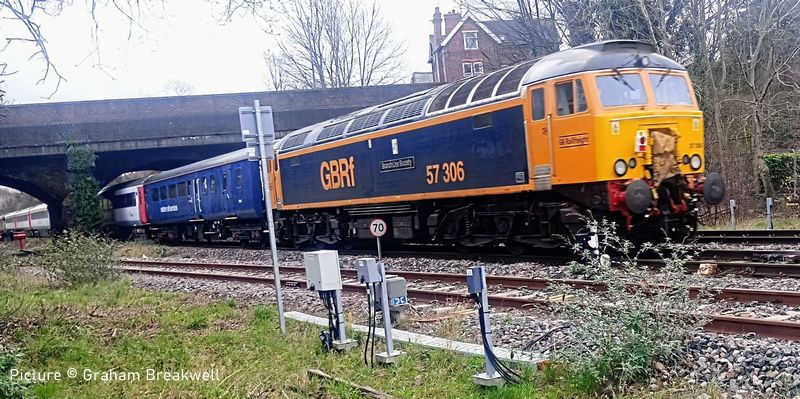
57 303 Branch line Society on the tail.
With stops at Gobowen, Shrewsbury, Wellington, Telford Central, Wolverhampton, Walsall and Nuneaton, and with a diversion through Northampton arrival at Euston was at 14:23 – just 2 minutes late. The officials on board were scheduled to meet the PM that afternoon but with a departure of 16:17 and rather a lot on his plate at the moment did it take place?
The return working arrived back at 21:21, 11 minutes date.
At present Wrexham has a direct service once per day each way, but it doesn't serve Shrewsbury because it is worked by Avanti and runs via Crewe. In the morning A 5-coach class 805 is added to one from Holyhead for the run to London, An evening service is detached at Chester to Wrexham. The unit then returns empty stock to Crewe. A token affair, really.
Crossings closed
From 1 March the two foot crossings in Prestatyn, on the North Wales main line, Sandy Lane crossing and Beverley Drive, have been permanently closed. People need to divert to a nearby road bridge, until a new bridge is built - information here . There have been a number accidents on these footpaths, Sandy Lane in particle was well used by school children and at the moment passing trains are limited to 75mph. It's part of the scheme to double the number of trains can be run.
There are two other foot crossings along the line, Pen Uchaf and Gwyn. which allow access to the beach for holiday-makers, dog walker and so on. They wiil be a single bridge.
Network Rail say: These crossings are among the highest-risk crossings on the Wales and Borders network. With Ty Gwyn being 21st and Pen Uchaf 37th out of 1000. Regular users of these crossings include families, children, and dog walkers. We have received numerous reports of near misses and instances of misuse. By increasing the frequency of trains, this risk is likely to increase. We want to create a safer way for people to cross the railway by reducing the risk of accidents.The design is still in progress, and the two crossings remain, with a red-light safety system, and a 'steward' on hand to tell people how it works. The bridge is hoped to be complete in 2027.
Freight notes
There are now some semi-regular flows out of Penmaenmawr, hauled by Colas Class 70 or DC Rail Class 60. DC Rail, also collect stone for, HS2 using their class 60 locos, destined for HS2 workings. However, the first week of March was quiet with only the Colas trains to be seen.
GBRf Trains which indicate to Small Heath, a stabling point for the GBRf wagons, and the origin of the empties to Penmaenmawr. However the loaded train runs from Penmaenmawr to the HS2 stone terminal at Quainton, staged en route at Wembley or Wellingborough.
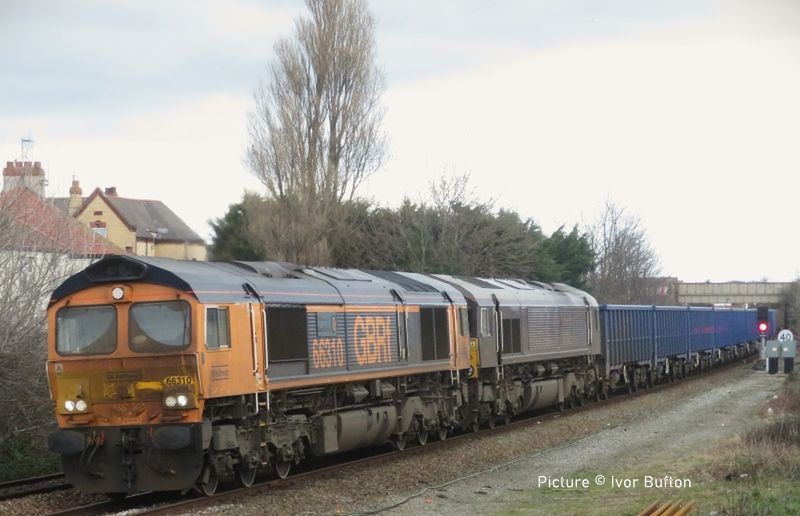
The route of the GBRf service requires a loco at each end, as a reversal at Tyseley is needed; the traditional method of 'running round' with a single loco would take too long. But on 25 February 66 310 with 66 746 working 4P46 06.52 Small Heath Caledonia Yard to Penmaenmawr Quarry deviated from the norm. Picture by Ivor Bufton.

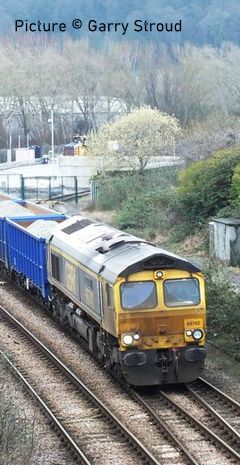
9 March: 66 742 Port of Immingham enters Llandudno Junction with the 6P46 Small Heath Caledonia yard to Penmaenmawr stone empties. The first nine wagons are already loaded with stone. On the rear, 66 755 Tony Berkeley OBE RFG Chairman 1997-2018. The train returned fully loaded as 16:53 to Wembley sidings (Garry Stroud),
Other movements of interest, notes by Gary Thomas
Colas ran from Bradwell Sidings near Stoke-on-Trent to Penmaenmawr and return on both 5 and 6 March, hauled by 70 805.
On 9 March, GBRf ran 66 755 + 66 742 top and tail from Small Heath to Penmaenmawr and then the loaded train to Wembley Sidings. Two more trips were scheduled later in the week but didn't run.
DCRail ran another Wembley Sidings to Penmaenmawr stone train over the weekend of 14/15 March, hauled by 60 046. DCRail also ran a service later on the Sunday 15 March with 60 055 from Chaddesdon Sidings near Derby to Penmaenmawr, returning to Quainton Road the following day.
Non-freight:
WCRC/Northern Belle ran a 'Mother's Day special' from Liverpool Lime Street on 15 March via Warrington Bank Quay and Crewe to Llandudno Junction and return with 57 314 and 47 812. (The glamorous destination wasn't advertised).

A Rail Operations Group's 37 510 Orion hauled a TfW class 231 "Flirt" (231 006) from Cardiff to Holyhead for wheel turning at the new wheel lathe in Holyhead. Picture at Llandudno Junction by Garry Stroud .

Cadnant Park, Conwy (Gary Thomas).
The loco was to return light-engine to Derby, but is still at Holyhead as this update is published.
Notes by Charlie: It seems the wheel lathe at Crewe is out of action. But why did it have to be 'dragged' you might ask. Well, no drivers in North Wales have trained on them. Have they checked the train to see if it scrapes on platform edges, etc? Maybe they don't today.
It's a look at what could be running in North Wales if more money has been available. TfW have two types of 'Flirt', most are Class 756 with 'tri-power', option either overhead electric, diesel, or battery. Also purchased was a small fleet of diesel engine only, which form class 231. When these were bought they were said to be for the Cardiff - Cheltenham service but a visit before Christmas found my train was an ancient pair of Class 153 units; the 231s were away in the Valleys.
The Dyserth mystery solved?
In a recent issue reader Peter Mouncey asked 'How did the limestone from Dyserth quarry get to Shotton steel works as there is no direct connection between the Coast main line and the line from Wrexham to Bidston/Chester Northgate? I can only assume it either went via Mold Junction to the connection at Hope on the line to Mold, with reversals, or through Chester to Mickle Trafford, and back on the CLC line to Hawarden Bridge/Shotton steelworks sidings. Both of these routes entail huge detours!
Well...
Mark Hambly suggests: 'There was a connection between the NW Coast line and the Connah's Quay dock lines (on the north side of the Coast line, between Shotton LL station and the bridge over the Buckley branch, near the wagon works and roughly opposite Cestrian Street , and there was also a connecting line on the low-lying land between the NW Coast line and the Dee foreshore from the docks to a facing connection with the WM&CQ line just to the north of Shotton HL station . So, theoretically at least, this route could have been used, but I do not know whether traffic was ever actually routed this way. (The links are to maps in the National Library in Scotland).'
Dave Sallery writes: I would think that the Dyserth limestone ran via Chester (reverse) and Wrexham (reverse). Mold Junction to Hope closed in the mid-sixties and the layout at Mickle Trafford is not signalled for a movement such as this.
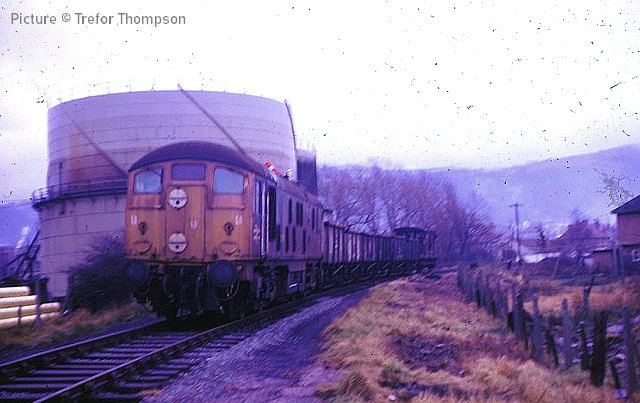
The 11 December 2020 notice board includes an illustrated article about the branch by Trefor Thompson, in which he writes that some of the crushed limestone, and also went to Brymbo steel works. One of Trefor's images is reprised above shown a train on the branch.
From Dave Sallery's Archives
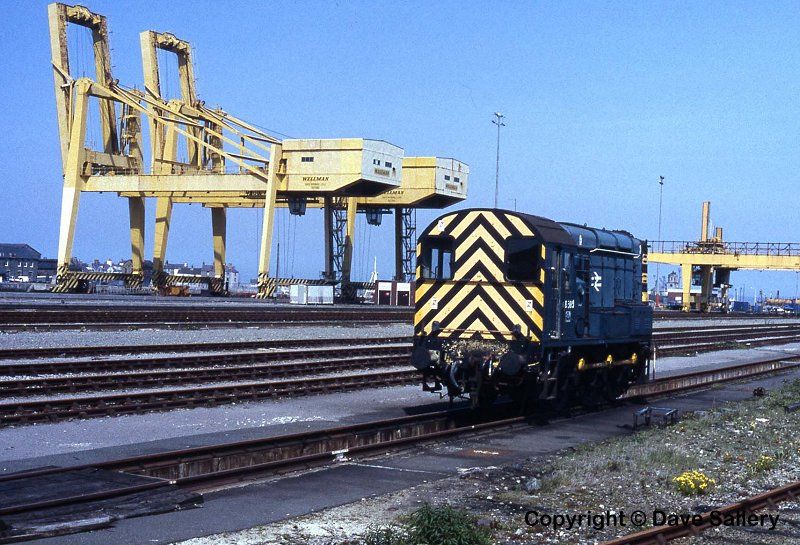
08 585 looking very lonely in the closed
Freightliner terminal at Holyhead on May 5 1993. The
loco was there as it was the only wheel-pit in
Holyhead. The cranes were later sold to Dublin port
despite being 'life expired'.

37 415 with the Mostyn to Hull Saltend empty acetic acid tanks passing Connahs Quay, 13 November 1992.
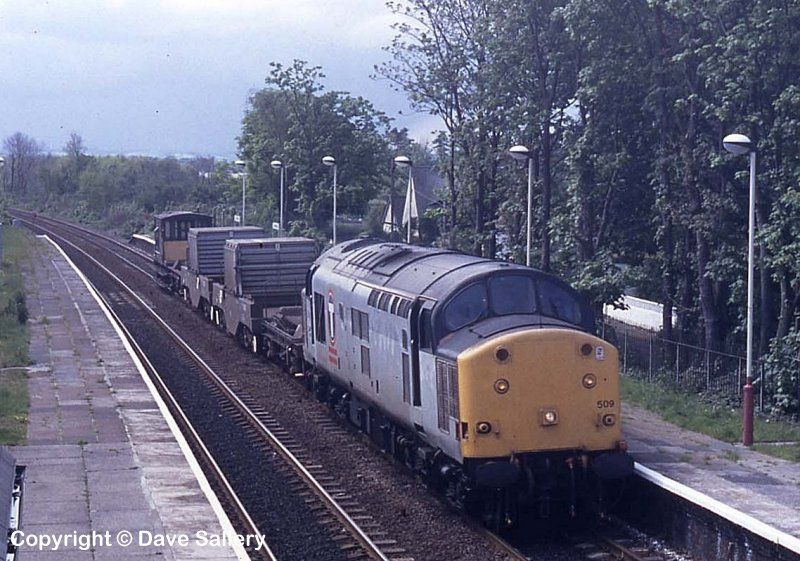
37 509 passes Llanfairfechan with the flask train
from Valley to Sellafield, 12 May 1998.

One of a number of railtours marking the end of regular
Class 50 operation was this train organised by the Class
40 appeal. The 'Festive Fifties' tour of 5 December
1992 passes through Abergele behind D400 Fearless
and 50 033 Glorious. Both locos are still
active service in the hands of private owners; 50 033 was
on show at the recent 'Greatest Gathering' at Derby.
D400, the first in the class, was re-numbered 50 050 when
the 'TOPS' computer system was introduced; otherwise
it would have become 50 000 which the system wouldn't
accept.
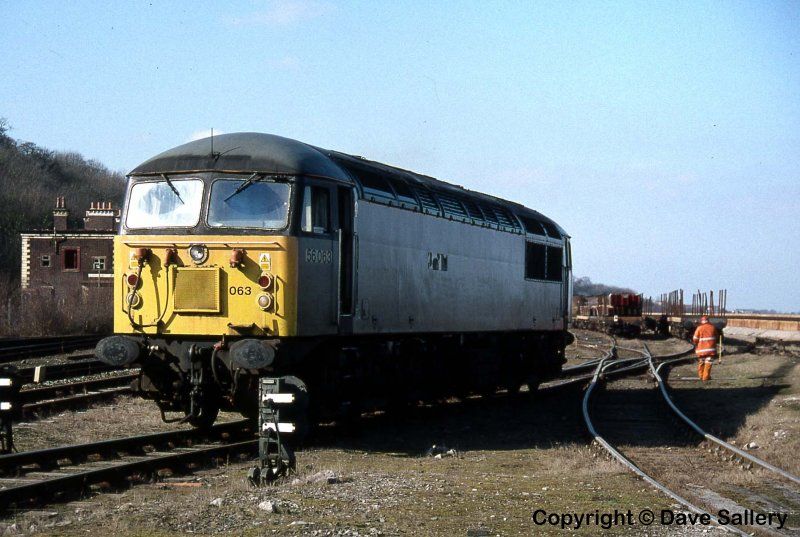
56 063 in Mostyn yard marshalling the empty bogie
bolsters and acid tanks. 3 March 2001.
Liverpool Overhead Railway - a rare image
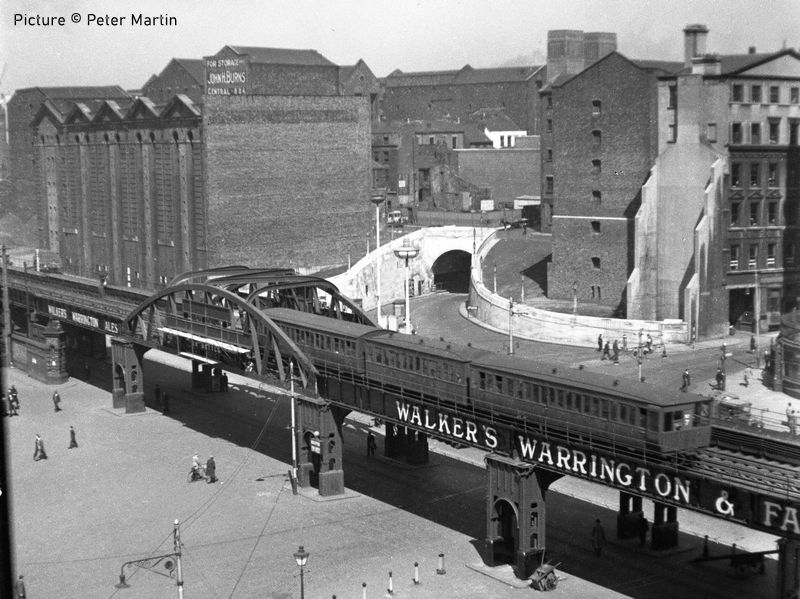
Peter Martin writes: 'I found the photographs of the Liverpool Overhead Railway at the end of the 16 February edition of the Notice Board very interesting. David Pool commented that there are very few photographs of the rolling stock taken from above so I thought that this photo may be of interest. It was taken from the Liver Building by my uncle, Jack Hesketh, who worked in that building. Judging by the appearance of the Mersey Tunnel Dock Entrance in the background, I would imagine it was taken about 1934.'
Looking Back: June 1971 ... and Corkickle - By David Pool
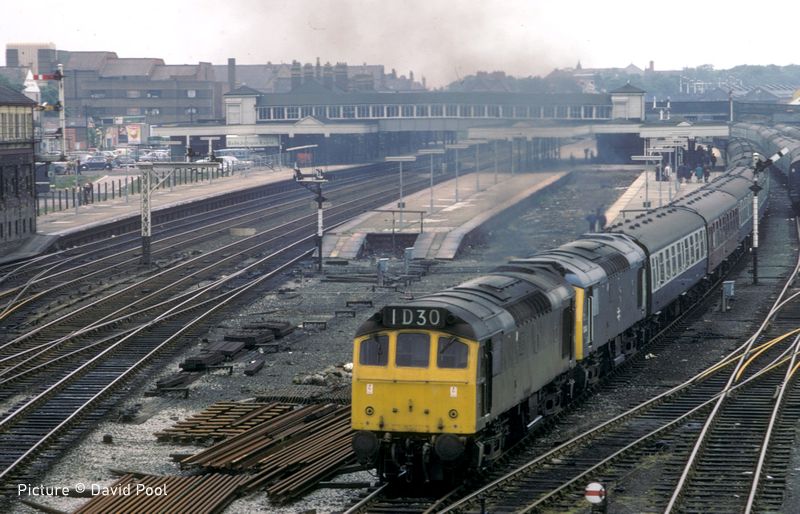
Rhyl Station was showing signs of decay in 1971. On Saturday 12 June the 09:01 Stoke to Llandudno was being worked by a couple of Class 25s, 7615 (later 25 265) and 5240 (25 090). The train had been in the less frequently used outer platform, and the tracks in the bay had by then been lifted. 7615 has been a survivor, at present in the care of Nemesis Rail at Burton on Trent.
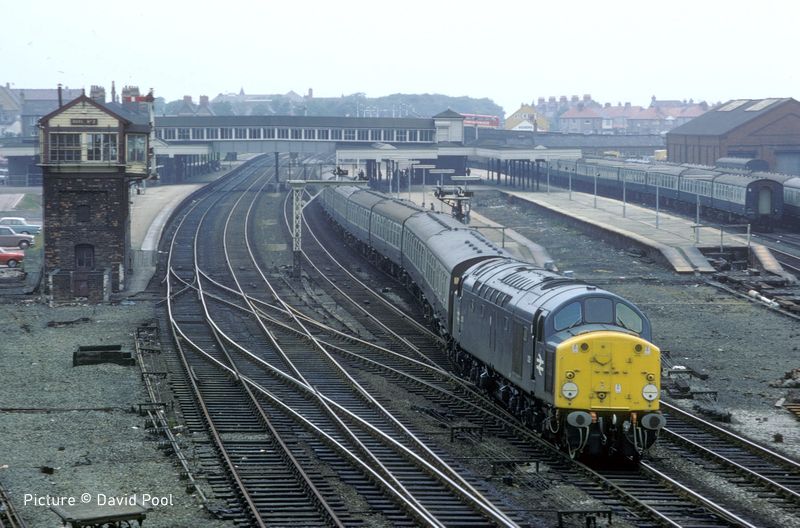
The 07:35 from Nottingham to Llandudno had used the normal Down platform, and was hauled by English Electric 225 (later 40 025).
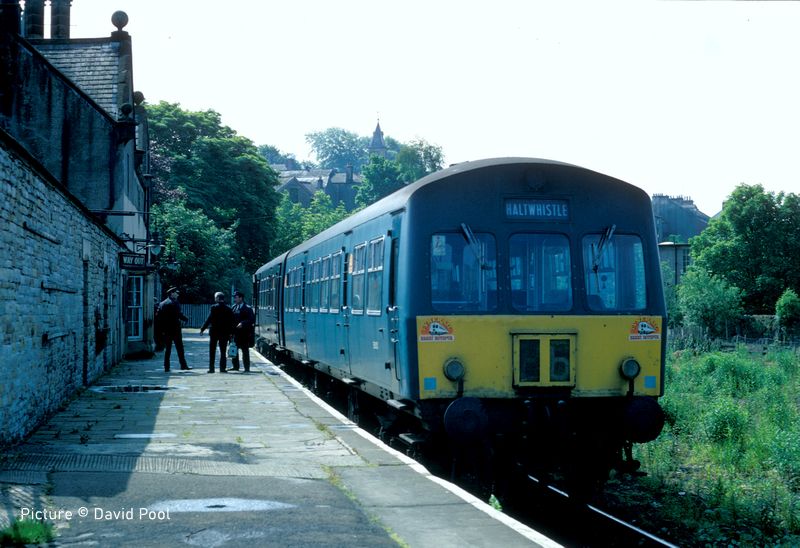
A week later I visited the Alston branch in Westmorland, then operated by British Railways but under threat of closure. The line closed in 1976, and attempts to reopen it as a standard gauge line were unsuccessful. A 2ft gauge line was eventually built on the trackbed, and the South Tynedale Railway now extends from Alston to Slaggyford. At Alston on 9 June 1971 a Metropolitan Cammell Class 101 E51206/E56053 had arrived from Haltwhistle and was returning at 10:53. The logos on the front of the unit are interesting, in that they show “Tynerail” and “Harry Hotspur”. Tynerail later became renamed as Tyneside Metro, but I’m curious to know why “Harry Hotspur” was shown. My understanding is that he was Sir Henry Percy, a famous nobleman from the North East who got the nickname while fighting the Scots. One of his descendants lived in the Tottenham district, and the football club is named after him.
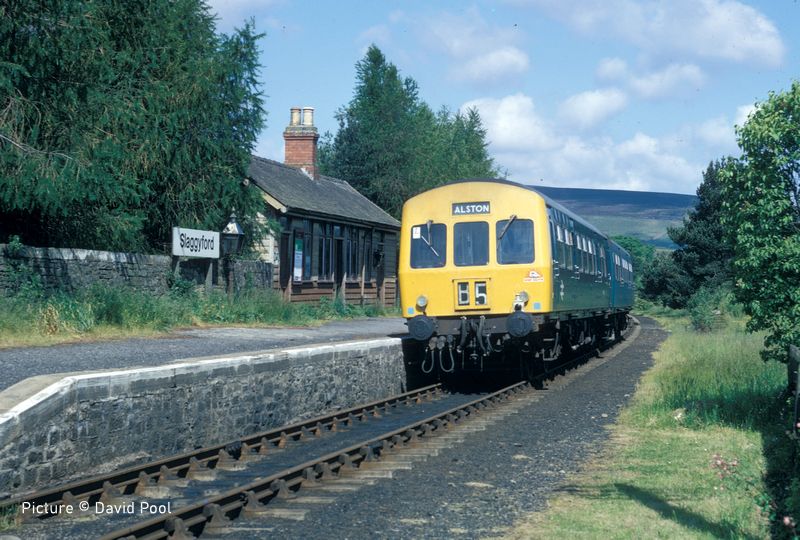
I moved on to Slaggyford to photograph the unit on its return journey to Haltwhistle. Note the obligatory red lamp on the rear car.
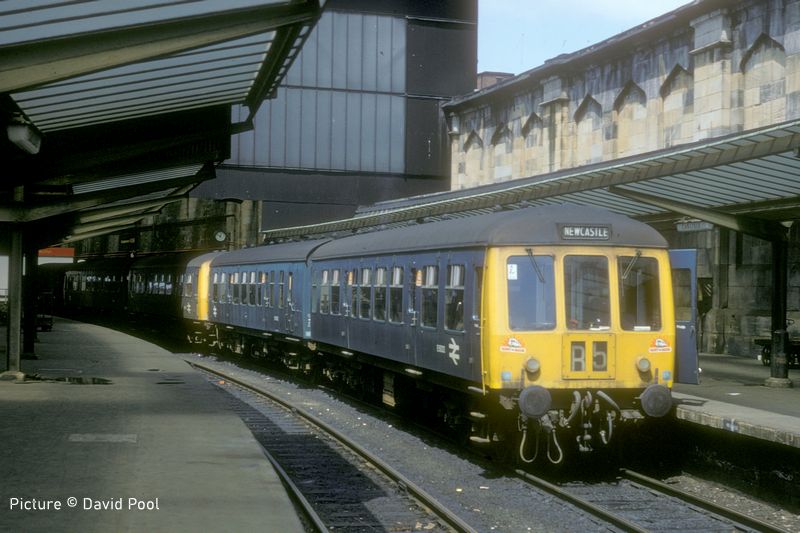
At Carlisle station, the 13:10 to Newcastle was a Class 108/Class 101 combination, the cars being E56202/E50622 and E51209/E56083. The 'Harry Hotspur' branding is also visible.
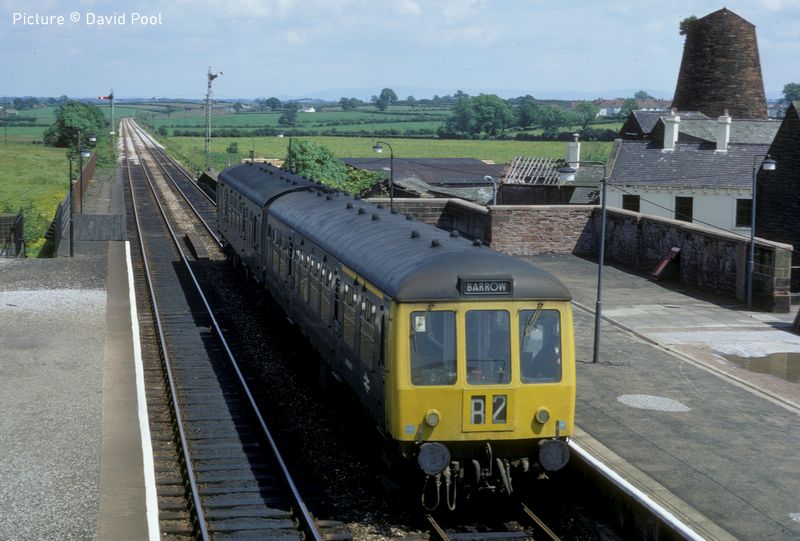
My final shot on that day was at Wigton, where the 13:25 Carlisle to Barrow was a Class 108 M56250/M50958. The Windmill had lost its sails, but it is still a distinctive landmark in the district.
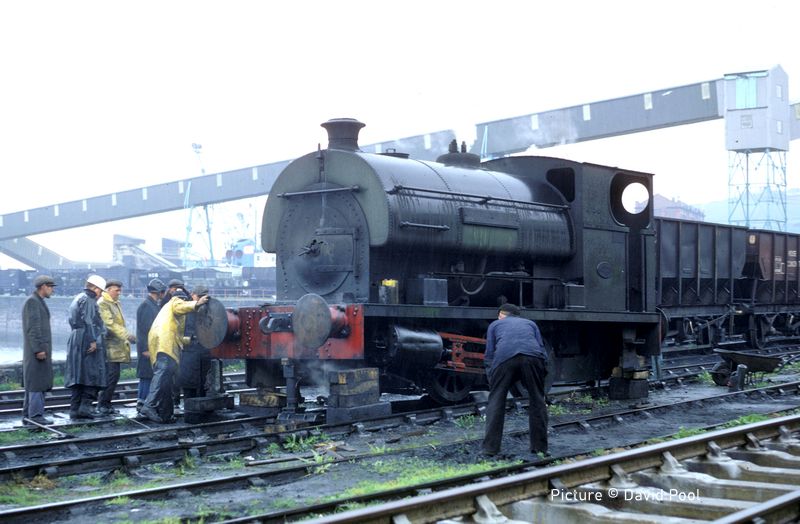
On 21 June 1971 I was at Whitehaven Harbour, where coal trains from Haig Colliery would have come down the Howgill incline to the Harbour sidings. There was a problem with Victoria, Peckett 2028 (1942), which had derailed, but the local railwaymen were coping without the need for a Railway Crane.
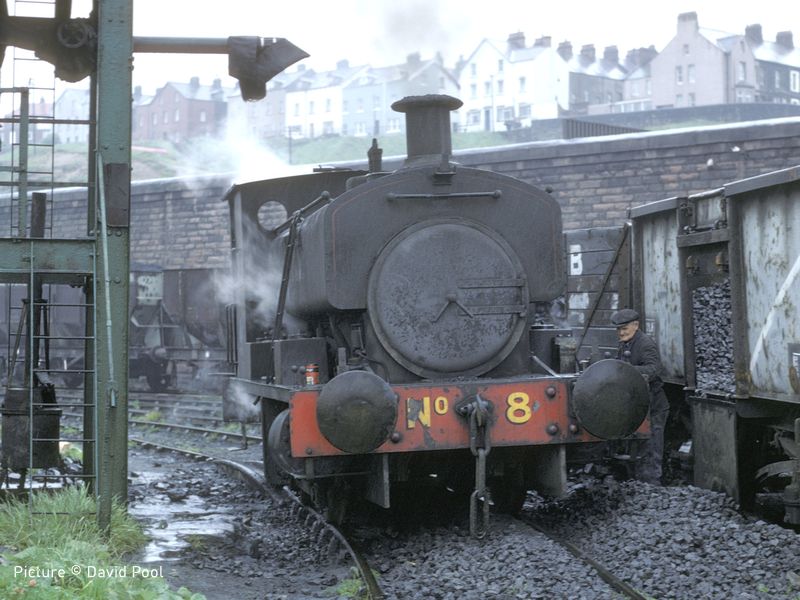
The arrangements for coaling the locomotives at the Harbour were rather basic. NCB No.8, Andrew Barclay No.1974 (1930) was being looked after by someone who appeared to be considerably older than the locomotive.
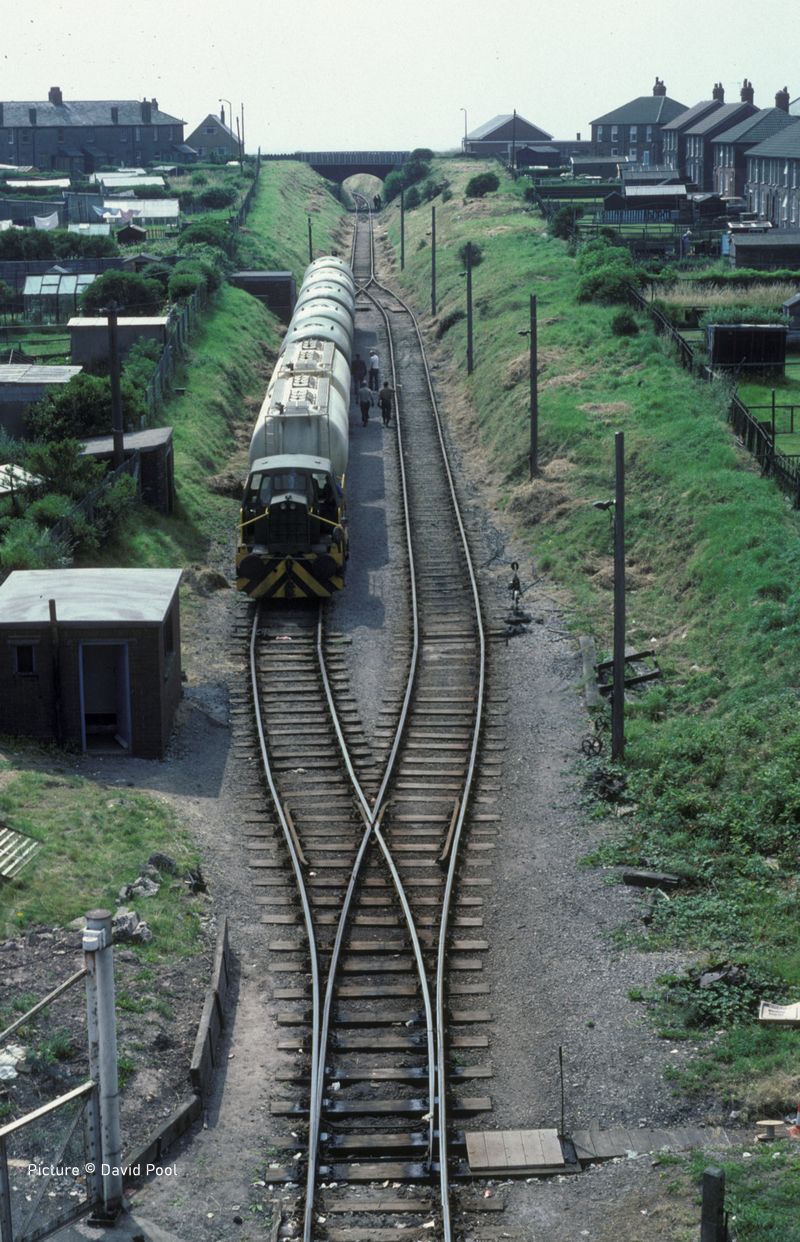
The Harbour was later redeveloped at a cost of many millions of pounds in the early 2000s, and little trace of the Howgill incline or the sidings remains today. The other rail access to the Haig Colliery site had been via another rope worked incline from the main line at Corkickle, locally known as the Corkickle Brake. This originally served the Ladysmith Colliery, but closed in 1931. In 1953 the Marchon Chemical Works expanded on the site of Haig Colliery, and the rope worked incline was reopened in 1956. Marchon was the largest producer of Sulphuric Acid in Europe, and at the time of my next visit to Whitehaven the incline was busy with rail tank wagons. These were brought from the Marchon Works to the top of the incline by a diesel locomotive, Rolls Royce Sentinel No.10206 (1969). My shot was taken from the Winding House on 28 July 1982, where I was made welcome as an enthusiast.
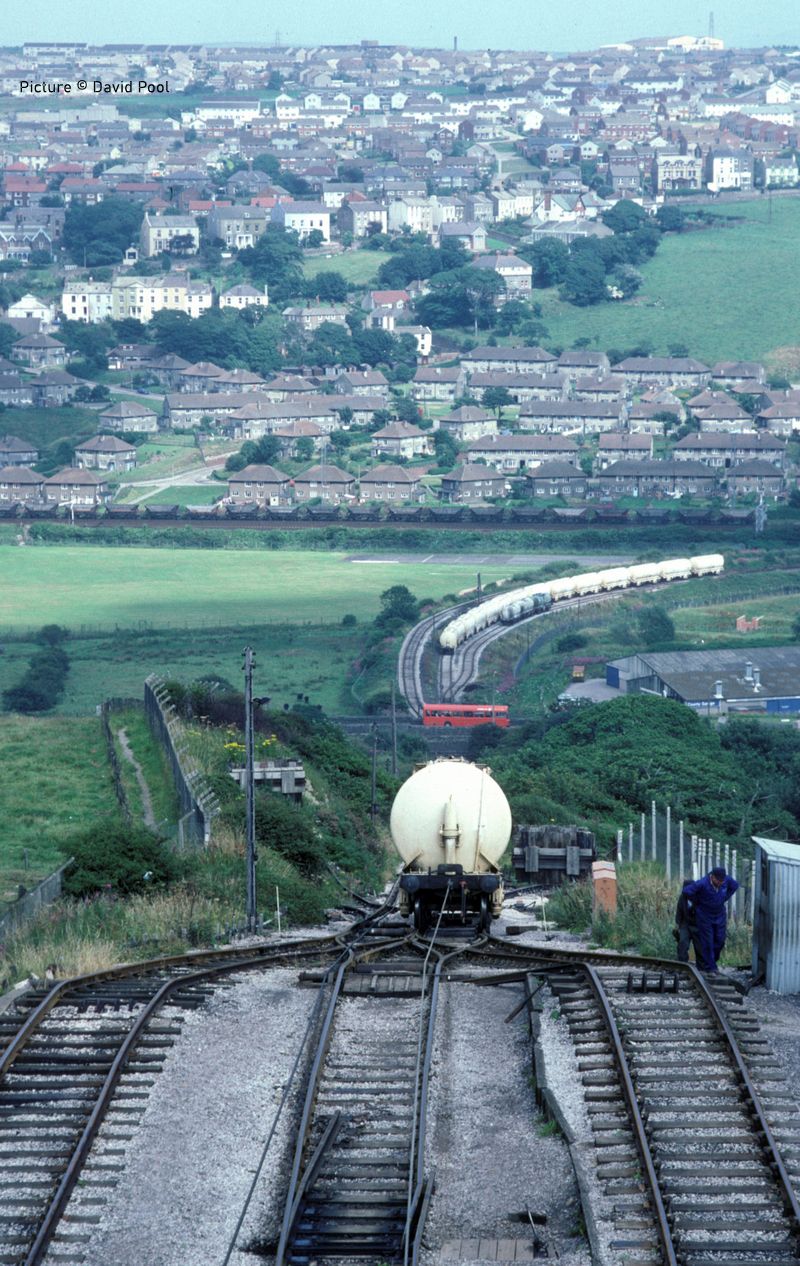
The view from the Winding House down the incline shows wagons descending towards the sidings at Corkickle on the main line. The upper part of the incline had a common third rail above the passing loop. The structures on the left and right sides of the incline were intended to catch any runaway wagons in the event of a rope failure. This was the last commercial rope worked standard gauge incline in Britain, and closed in 1986. The Bowes Railway has a rope worked incline, and has given demonstrations of rope haulage, but the incline is currently not in use.
Home page | Archive | Previous Notice Board