NORTH WALES COAST
RAILWAY :NOTICE BOARD
Rheilffordd arfordir gogledd Cymru: Hysbysfwrdd
22 June 2026
Next update 6 July




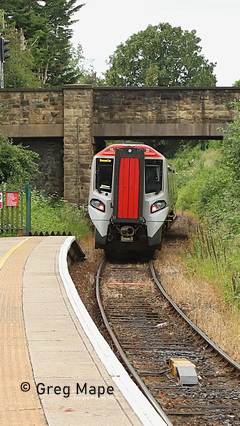
Forthcoming events
See our Calendar Page for operator details.
July 2026
Friday 3 July Saltburn Railtours Saltburn to Llandudno (one way, WCRC diesel hauled)
Monday 6 July Saltburn Railtours Llandudno to Saltburn (one way, WCRC diesel hauled)
Sunday 12 July Railway Touring Company "The North Wales Coast Express", Liverpool Lime Street to Holyhead. WCRC steam loco TBC.
August 2026
Wednesday 19 August Midland Pullman "Torbay Riviera Pullman", Chester, Wrexham General, Ruabon, Chirk to Torquay and Paignton. LSL Midland Pullman HST.
29-31 August 2026 Bala Lake Railway Steam Gala
September 2026
19-20 September Bala Model Railway Show
Thursday 3 September Clwyd Railway Circle "Severn Valley Steam" Highlights of 2012 and 2013 Steam Galas - Glyn Jones
Saturday 19 September Northern Belle "Settle & Carlisle Steam Special", Wrexham General and Chester to Carlisle. WCRC steam locomotive over the Settle & Carlisle line. Diesel hauled otherwise.
October 2026
Thursday 1 October Clwyd Railway Circle 'The view from a signal box window' Adrian Bodlander
November 2026
Thursday 5 November Clwyd Railway Circle "40 years of Railway in the Chester area" - Geoff Morris
December 2026
Thursday 3 December Clwyd Railway Circle Ian Mainprize 'German Railway Development'
Belmond have advertised their 2026 three-day Britannic Explorer trips to the sidings in Barmouth, start dates are: 30 March, 13 April, 4/11/25 May, 1/8/15/22/29 June, 6/20/27 July, 3/17/21/24 August, 14/28 September, 19 October and finally 9 November.
Other useful sites:
For up-to-date North Wales information
join the North Wales Trains News group
North Wales Coast Railway website created and compiled by Charlie Hulme
.%20passes%20Llandudno%20Jcn,%20Thurs%2011th%20June%202026.jpg)
Adding a splash of colour past the flower arrangements at Llandudno Junction station, 37 422 Pegasus on the rear of the 3Q94 Bangor to Derby RTC (37099 on the front) makes its way back to Derby on 11 June (Garry Stroud),
Double Peter - by Alan Crawshaw
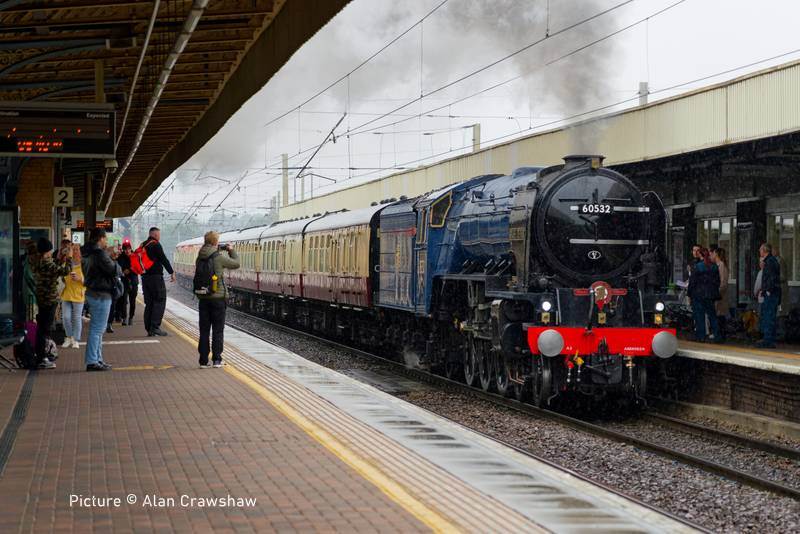
On 3 June I alighted at Warrington Bank Quay in bright weather with a hint of sunshine and positioned myself at the platform end, but retreated to the shelter of the canopy when the downpour arrived in advance of the train. I think this was the first time I've seen Blue Peter in preservation.
Blue Peter was the motive power for the first Settle & Carlisle 'Fellsman' of 2026 running from Crewe to Carlisle and return over the Settle and Carlisle line.
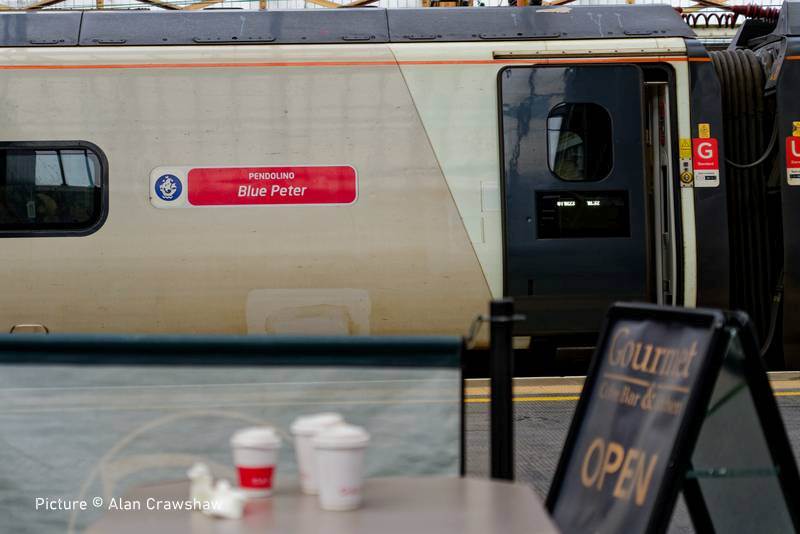
On to Crewe, where I noticed that the Pendolino which drew up while I was having a coffee bore the same name.
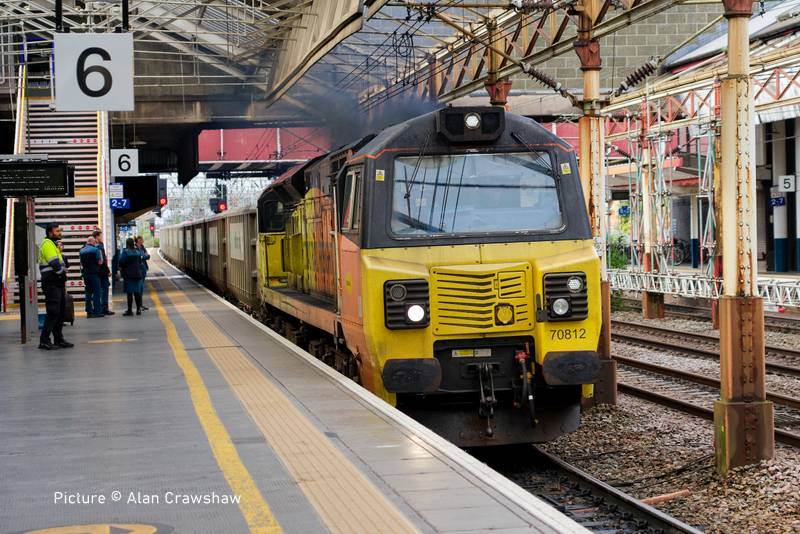
On my return from Birmingham, I had twelve minutes to wait for the Avanti back to Bangor, during which I was entertained by the passage of 70 801 in charge of 6M33 Llandudno Junction to Bradwell up sidings.
What, no trains?
Abstract from a Network Rail document, The full script is here
Network Rail is planning a significant programme of investment across the North Wales Coast line, with extensive engineering works proposed between Chester and Holyhead in January 2027. The programme, which is being developed as part of the wider Network North Wales investment, will help improve railway reliability, capacity and accessibility across the region while supporting growing demand for sustainable travel and stronger community connections.
Current plans include a continuous closure of the railway for up to four weeks in January 2027, allowing teams to deliver a wide range of improvements safely and efficiently.
The work is expected to include track renewals, drainage improvements, vegetation management and the installation of two new fully accessible footbridges at Prestatyn and Pensarn, providing safer ways for communities to cross the railway.
News pictures
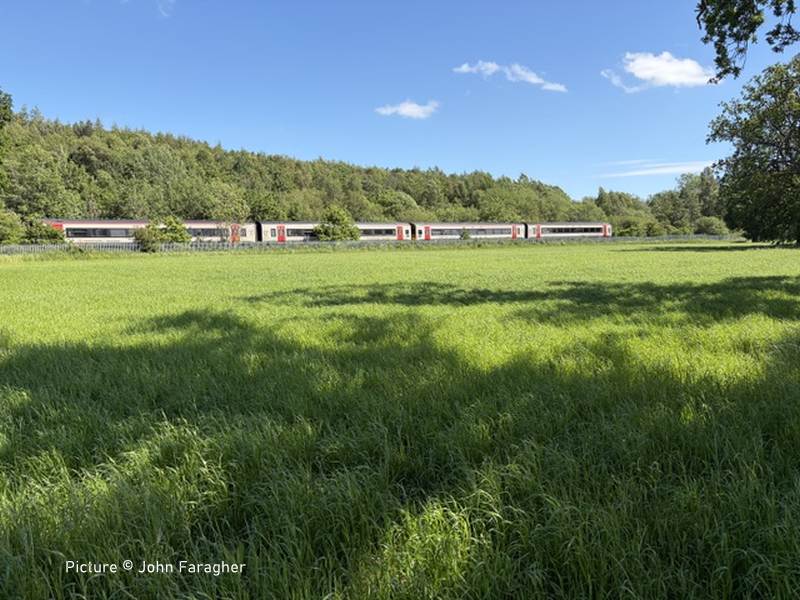
A beautiful afternoon on 29 May with 1D14 Birmingham International to Llandudno Junction made up of units 158 827 & 158 832 running a couple of minutes late and shortly to arrive in Wrexham General. The picture was taken on a public footpath near a footbridge over the railway to the east of Johnstown. The wooded high ground behind the train is Bonc Yr Hafod Country Park, which was created with mining waste dug from the shafts and tunnels of Hafod Y Bwch mine). The mine opened in 1867 and finally ceased production on 9 March 1968. (John Faragher)
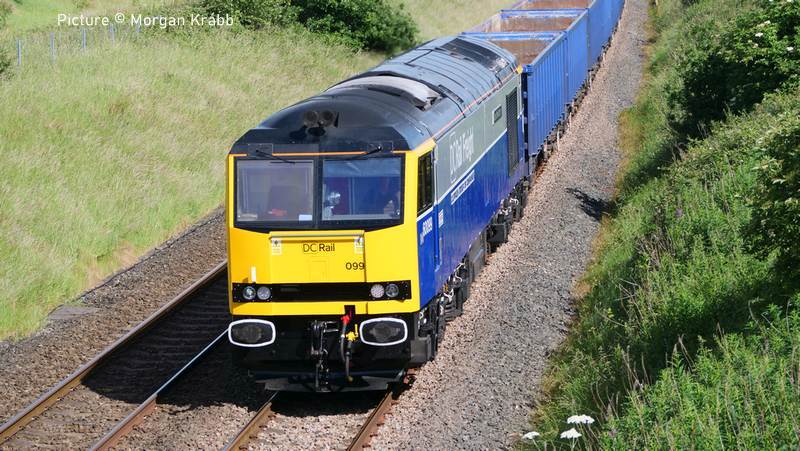
60 099 on 6D22 Chaddesden Sdgs - Penmaenmawr Quarry rumbles past Tattenhall Marina to Chester before continuing her journey up to Penmaenmawr. This was 60 099's second time down the Coast! - 14 May (Morgan Krább)
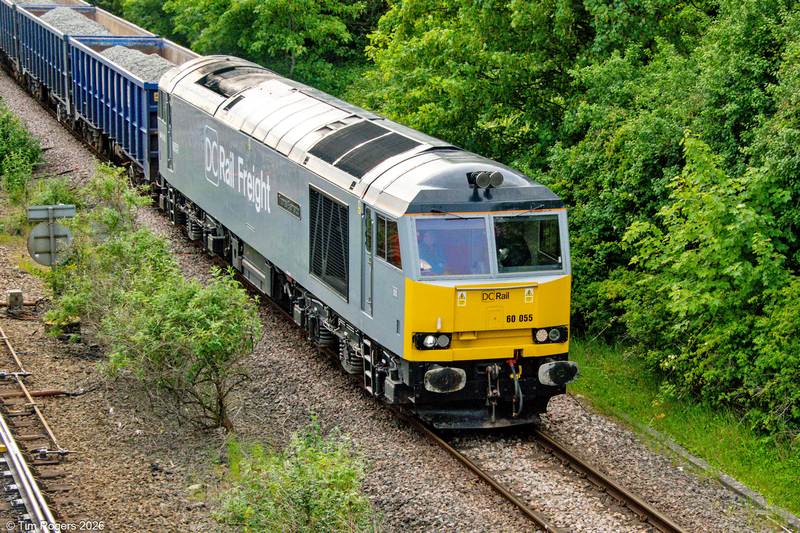
On 21 May 60 055 Thomas Barnardo passes Llandudno Junction 6A26 19:53 Penmaenmawr Quarry to Willesden DC Rail Sidings which it reached at 02:30, 44 minutes ahead of the booked arrival. The train then proceeded to the 'Quainton Railhead' from where materials for the HS2 would be distributed to the required location. Quainton Railhead is a set of sidings on what was once the Great Central Railway's Main Line.
At the present passenger trains terminate at Aylesbury Vale Parkway but tracks remain to the Quainton Railhead, and then at the Buckinghamshire Railway Centre. at what was Quainton Road station. Further north the line meets a rail-served waste recycling plant. The GC line ends here and the rails take a turn on to a links Bletchley with Oxford which have become part of the 'East West Rail' which hopes to re-crate a line from Oxford to Cambridge which existed until the closures of the 1960s.
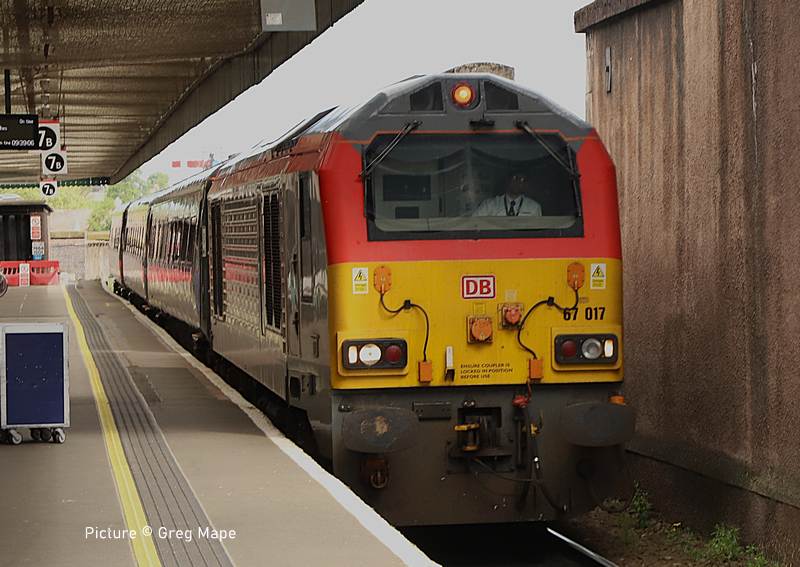
67 017 brings the 08:30 Manchester to Cardiff into Shrewsbury station on 13 June (Greg Mape).
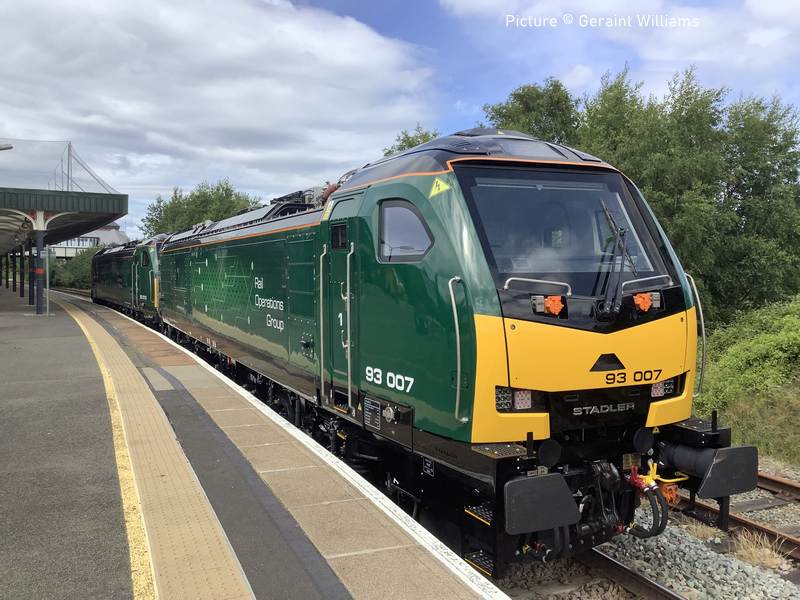
No sooner had I had written about Class 93 on 16 June two appeared at Llandudno Junction, 93 007 (see below) ...
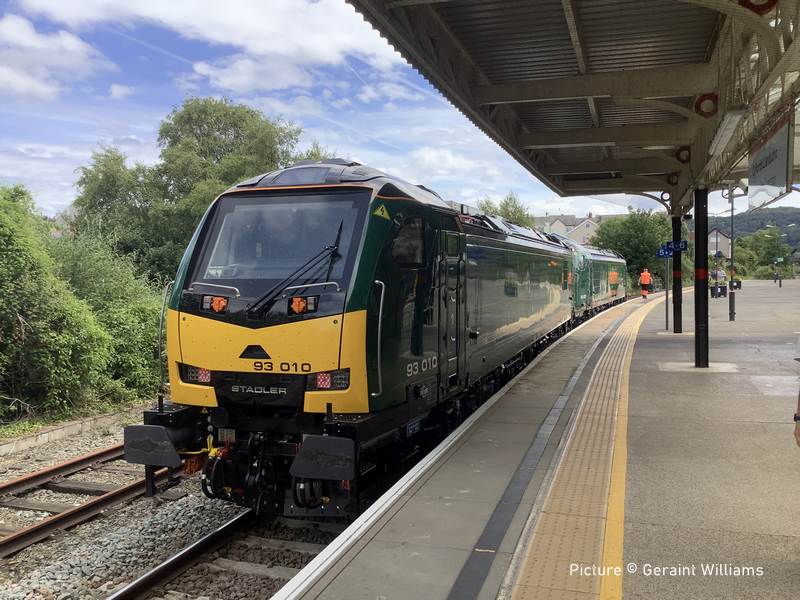
... and 93 010 appeared at Llandudno Junction. (Geraint Williams)
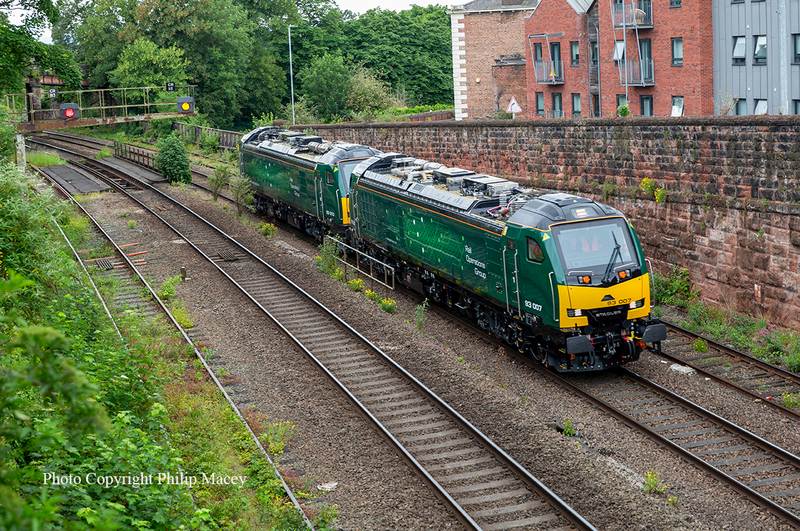
The locos were on test / driver training, passing through the Chester City walls approaching Chester West Junction on the return run on Tuesday 16th June 2026.
The two locomotives were running from Crewe Gresty Bridge through Chester to Llandudno Junction were they reversed to return. The planned speed for the whole route was 33mph.
These locomotives would be useful as they can run on the wires from London and continue on the North Wales Coast line under Diesel/Battery power.
The tri-modes. The electric mode is 25kV AC overhead supply. The diesel engine is a turbo charged 12-cylinder Caterpillar C32 compliant with EU Stage V emission standards. The battery packs are two lithium-titanium-oxide packs. There is also a hybrid mode using the diesel and batteries. (Philip Lacey)
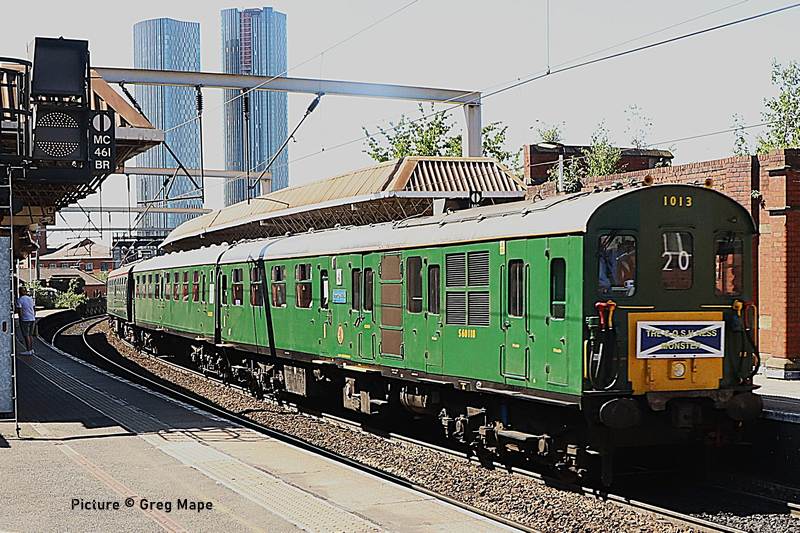
The preserved Class 201 units returning from Linlithgow to Tonbridge on 24 May via Manchester Piccadilly due to the engineering work south of Wigan North Western. Greg Mape's The pictures are of it passing through Deansgate.
-3.jpg)
Tonbridge to Inverness & Aberdeen named the "Gosh Ness Monster" With boarding points from Tonbridge up the West Coast Main Line, the journey took passengers via Carlisle, and Edinburgh Waverley on day one. Day two headed from Waverley towards Edinburgh Haymarket, Perth, Aviemore, Inverness, Aberdeen, and both the Tay and Forth Bridges. On day three, the tour made its way down the West Coast Mainline (with a diversion through Manchester) from Edinburgh Waverley.
When the time came to Southern Region of British Railways to abandon steam, they eschewed the lightweight diesel-mechanical units. For the few non-electrified lines something that match their existing trains for maintenance. Based on the British Railways Mark 1 coach design, and added a heavy duty diesel engines, They chose the English Electric four-cylinder engine which mounted on the floor of one of the engine behind of the cab. The same engine was used for the class 73 locos built for use when away from electrified track.
There were two and three versions with a single engine, Also for a use on the Hastings line there Class 201 . That line had a tunnel which normal trains were allowed to pass, so a batch were built with flat-sided bodies, and an engine at each end and coaches to match.
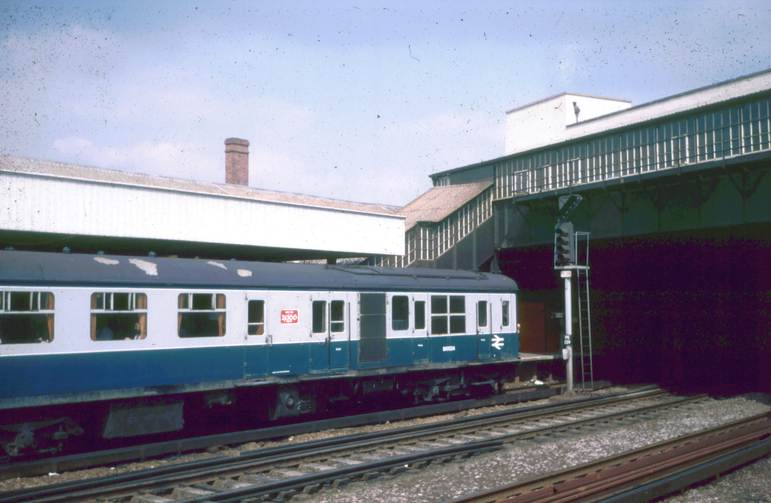
From Charlie: 'I well remember taking this picture in 1985. My wedding day was a few days ahead and my Best Man and I decided to make a train journey instead of the customary beery 'stag-do'. The line from Eridge to Royal Tunbridge Wells West station was about to close, so we made that our target. Can anyone tell me the name in the station in the picture?
A mad half-hour at Crewe - by Richard Snook
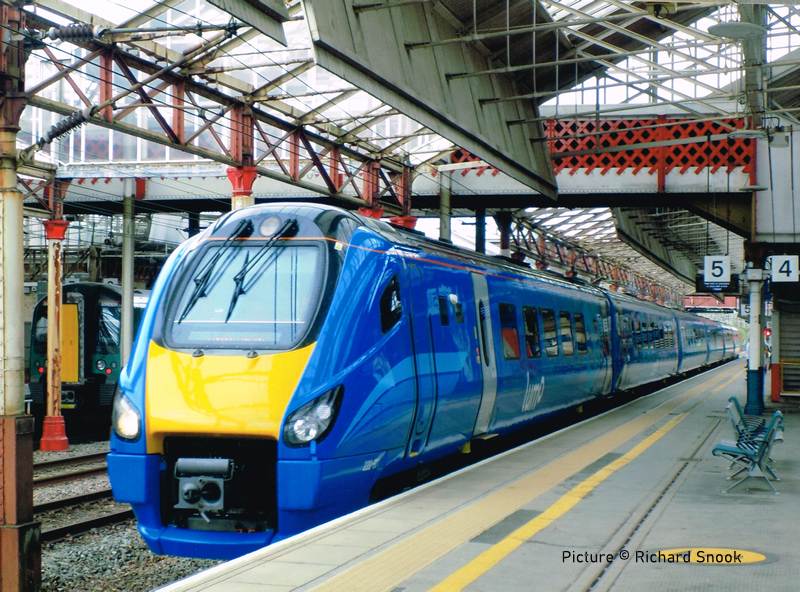
Observed at Crewe in half an hour on May 20 between 13:00 and 13:30.
In Platform 5 was 222 601 (ex EMR 222 001) in new LUMO livery on test for the new Euston - Stirling service beginning shortly.
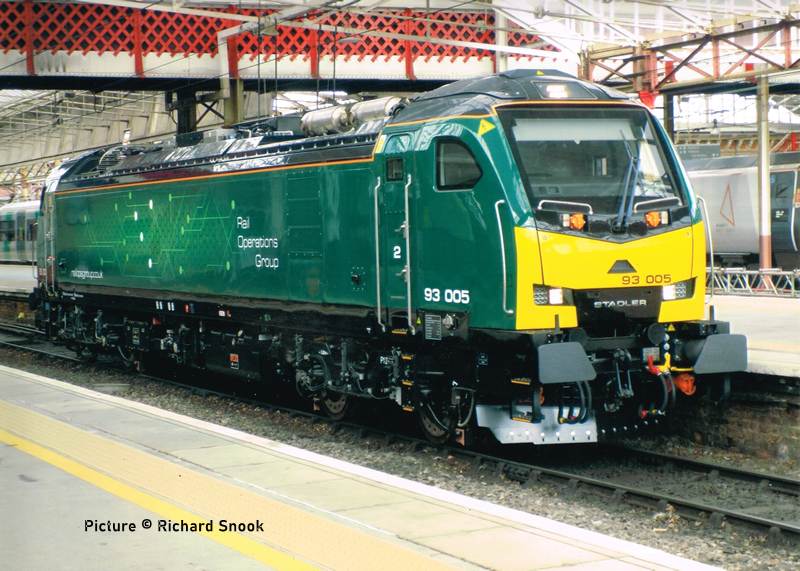
In Bay 7 was new tri-mode loco 93 005 on test / driver training, working out of Gresty Bridge DRS depot there they are based on a 2-year-agreement. See more pictures and text pictures above.
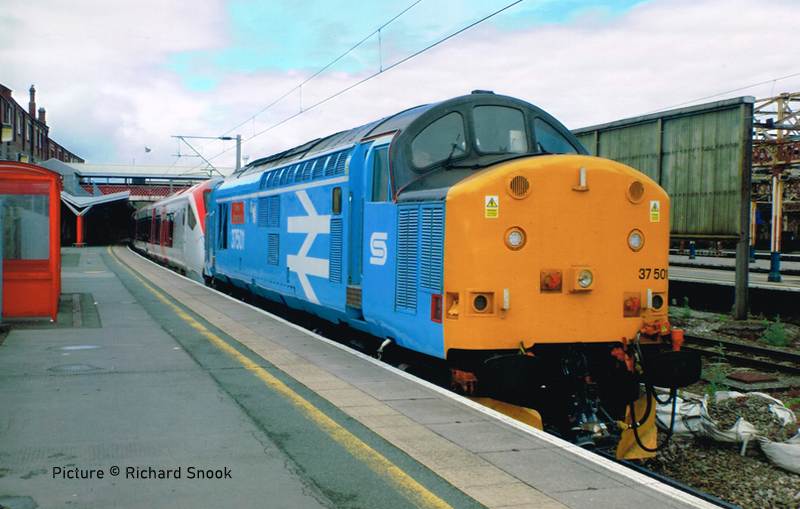
Passing through came 37 501 Teesside Steelmaster hauling a new 'Flirt' 231 010 from Cardiff Canton to Holyhead for the attention of the wheel lathe. This is the kind of work which presumably will taken over by Class 93s.
ERTMS Comings and Goings - Report to Chris Scott
I was in Barmouth for a few days this week and saw that a 197 was due on driver training late on the evenings of 1st and 2nd of the month. I had seen the first one crossing the bridge, but when I checked the next day it had been cancelled. However perusal of real time trains showed the arrival of an unadvertised express at 18:57. I decided to wait and at 19:01 the Britannic Explorer appeared with 97 304 and 97 302 in charge.
.jpg)
The late arrival of this train had also delayed the departure of the 18.52 to Birmingham International. Having pulled into the platform, the water tanks were filled up by support crew and rubbish bags were removed,
.jpg)
By now 97 304 had uncoupled and moved onto the Down Line and reversed back on the Up line to run through the station and then crossover, in order to couple up to the rear of the coaching stock.
.jpg)
The ensemble the moved forward on the down, only to stop when clear of the station limits and then reverse back into the Up side of the station to await the arrival of a Birmingham to Pwllheli service.
.jpg)
When eventually this train has left,the 97s and train crossed over once more to the down platform in order to comply with ERTMS procedure, before preceding surprisingly almost on time. During this time the passengers were wining and dining and may not even have noticed the coming and goings.When not coupled to the coaching stock, the 97s did sound rather meaty. Both locos had been nicely prepared and clean.
-1.jpg)
This picture was taken from a place of safety, the level crossing.
Welsh Highland Railway news
On the 22 May 2026 South African Railways NG15 2-8-2 loco 134 Kalahari hauled its first passenger train between Caernarfon and Porthmadog on the Welsh Highland, and return. This was a special train reserved for all those who supported and volunteered on the locomotive during its restoration which began in 2008.
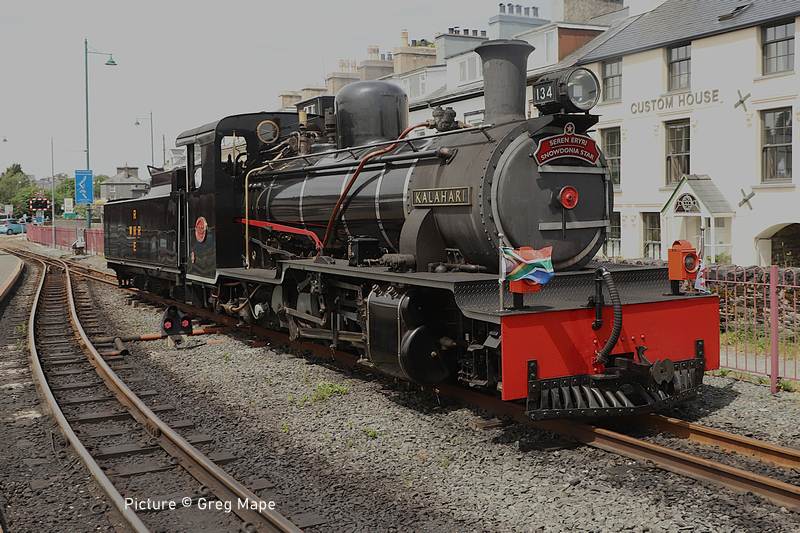
Greg Mape captured in Porthmadog station on 25 May.
Accident on the Marches
The Rail Accident Report has been published and reads some interesting details. https://www.gov.uk/raib-reports
'At around 10:37 on 22 May 2025, a passenger train collided with an agricultural trailer being towed across the railway at Nordan Farm user-worked crossing, in Herefordshire.
'The train was travelling on the Down Main line between Ludlow and Leominster at
around 80 mph (129 km/h) when the accident occurred. Six passengers and one
member of staff received minor injuries. The train did not derail, but significant damage
was caused to the leading DVT (82229) of the train and to the agricultural trailer.'
Thoughts
On arrival at the crash scene the police arrested the driver of the tractor, as it appeared that he had failed to contact the signaller for permission to cross. However it soon became clear that he did have permission, and the signaller had forgotten about a train approaching. There are devices in the signalbox to show that the line is occupied, but the were ignored. Sadly, Woofferton signaller was struggling with a domestic emergency, lack of sleep and use of personal mobile phone.
It was a busy time at Nordan farm, and there was a large amount of silage to be moved in several runs, each time the permission had to be given, each time the signaller had to judge the location of the trains in the area. The section of line between Leominster signalbox and Woofferton signalbox is around six miles, and there are nine user-worked crossings in this section, any might request permission at any time. In these old-style signal boxes there is no indicator to help the signaller; you might think a simple DPS system as seen on buses could be installed.
A South West Holiday, 1971 - by David Pool
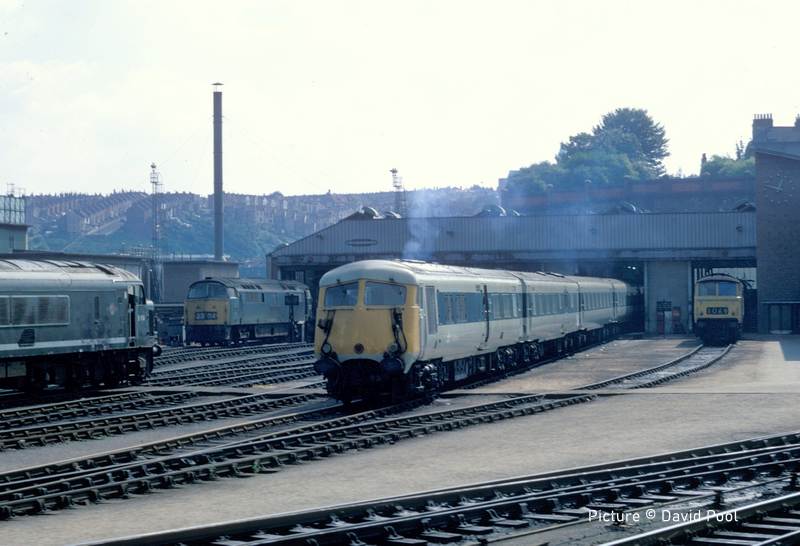
I was travelling on the Motorail service between Newton le Willows and Newton Abbot on 12 September 1971. As we passed Bristol Bath Road Depot a Western Region Pullman set was visible, together with a Peak and a Western diesel. A Hymek diesel is on the right – at that time the headcode often indicated the locomotive number, in this case 1069 for D7069.
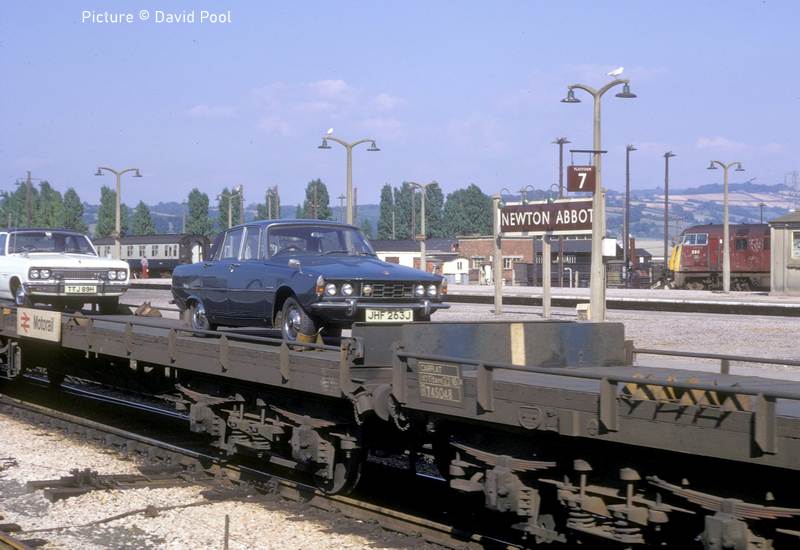
Arriving at Newton Abbot, the cars were about to be offloaded. On some Motorail services protective covers were fitted to the car windscreens, but on this occasion the cars had travelled without damage on the open carflats, the motive power having been D1571 throughout.
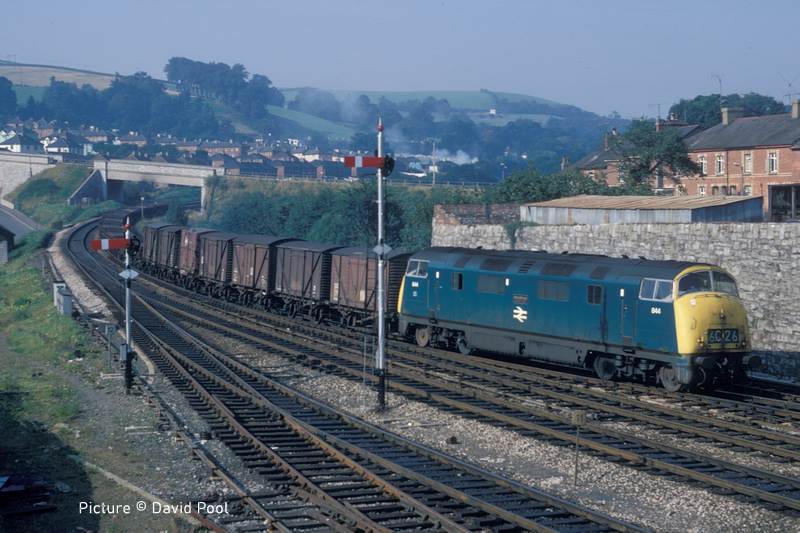
Totnes was always a very good location for railway photography. On 13 September 1971 a Warship diesel, D844 Spartan was cautiously taking the slow line through the station with a freight working from the Plymouth direction. The headcode 6C26 indicates it was heading for Exeter. This locomotive was withdrawn three weeks later.
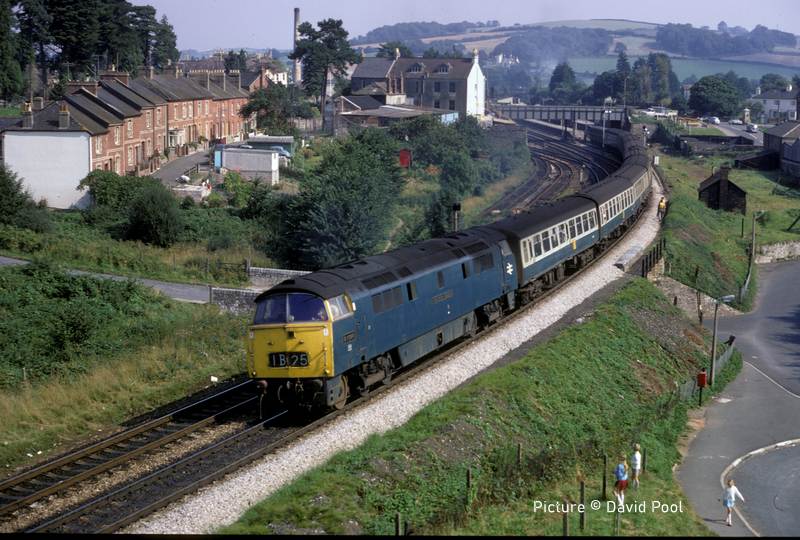
The 08:30 Paddington to Penzance had just called at Totnes station, and D1056 Western Sultan was tackling the 1 in 66 gradient, which would become 1 in 47 higher up Rattery bank. In the other direction.
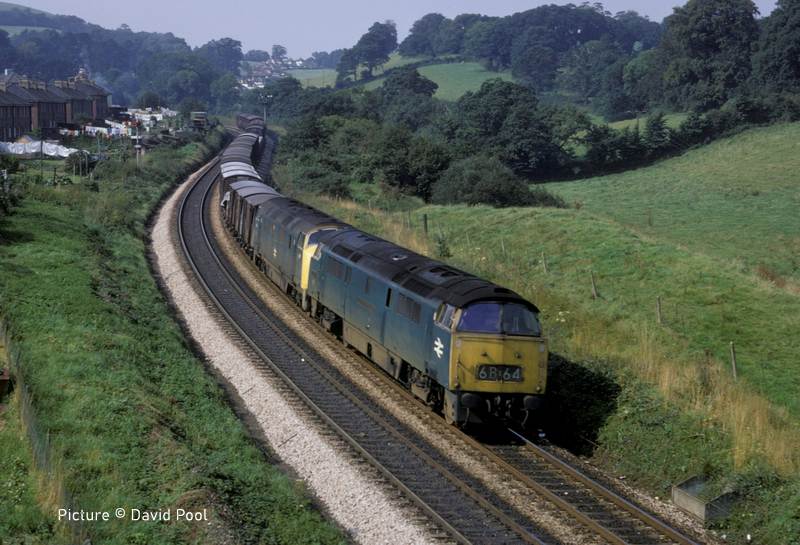
A freight was approaching, double headed by 1058 Western Nobleman and Warship 816 Eclipse. The headcode 6B64 shows it was probably a working from St Blazey to Bristol.
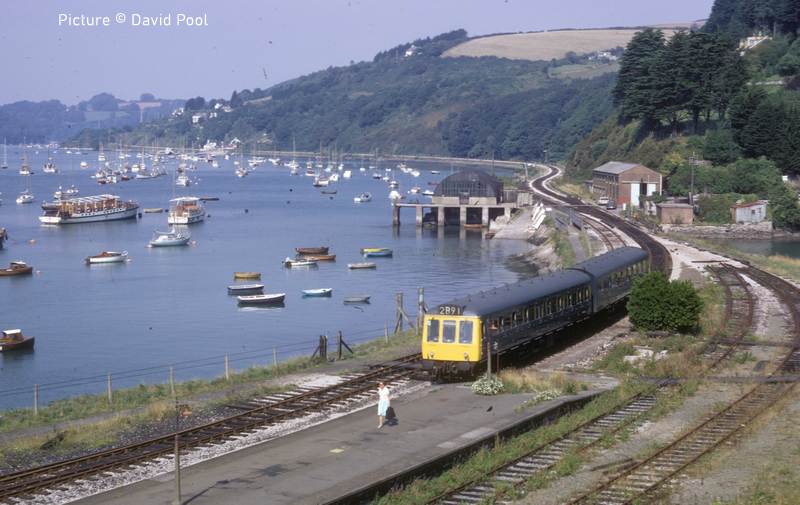
The branch lines in the district were showing signs of neglect in 1971. The Birmingham Class 118 dmus were working many of the branches in Devon, which had been reduced to single track with no run-round loops at termini. The line from Paignton to Kingswear was still open, and dmu W51313/W51328 was arriving at Kingswear with the 13:30 from Paignton. The Dart Valley branch had become a Preserved line in 1969, and the Dart Valley Railway Ltd is the present owner of what is now the Dartmouth Steam Railway, running from Paignton to Kingswear. Dartmouth station has never been on a railway line, being on the opposite bank of the River Dart from Kingswear, with passengers for Dartmouth still conveyed by ferry.
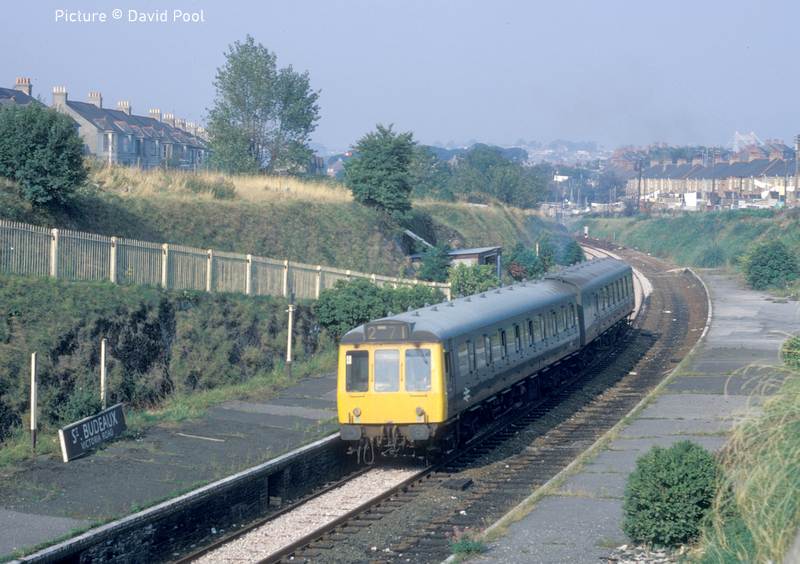
On 14 September 1971 I photographed on the branch from Plymouth to Bere Alston and Callington, which had been part of the Southern Railway’s network from Exeter to Plymouth via Okehampton. The two stations in the Plymouth suburbs at St Budeaux are Ferry Road on the ex GWR line and Victoria Road on the adjacent SR line. The 10:02 Gunnislake to Plymouth was calling at the latter station, which could be identified by the name on the board lying on the platform. The Class 118 dmu was W51326/W51311.
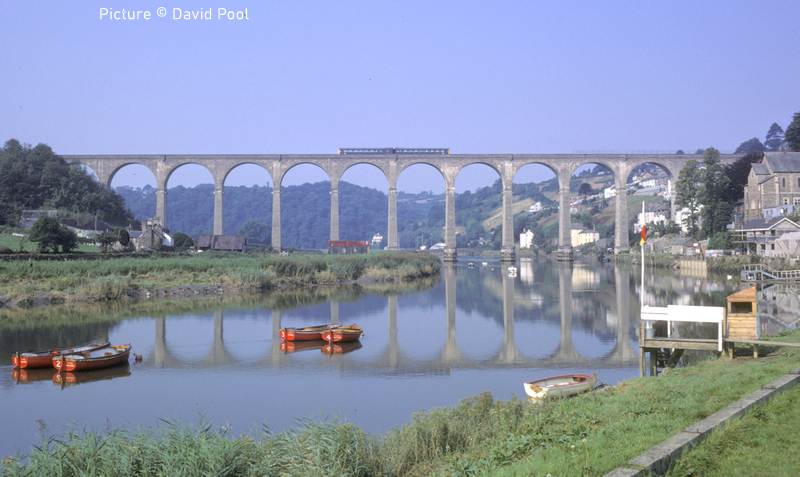
Considering that it was only built for a branch line to the small town of Callington, the viaduct over the River Tamar at Calstock is a remarkable structure. The Class 118 dmu had left Plymouth at 11:20 for Gunnislake, and after reversing at Bere Alston was approaching Calstock (in Cornwall) on the right of the image. The river is the County Boundary, and is flowing in a North Westerly direction here before heading South towards Plymouth.
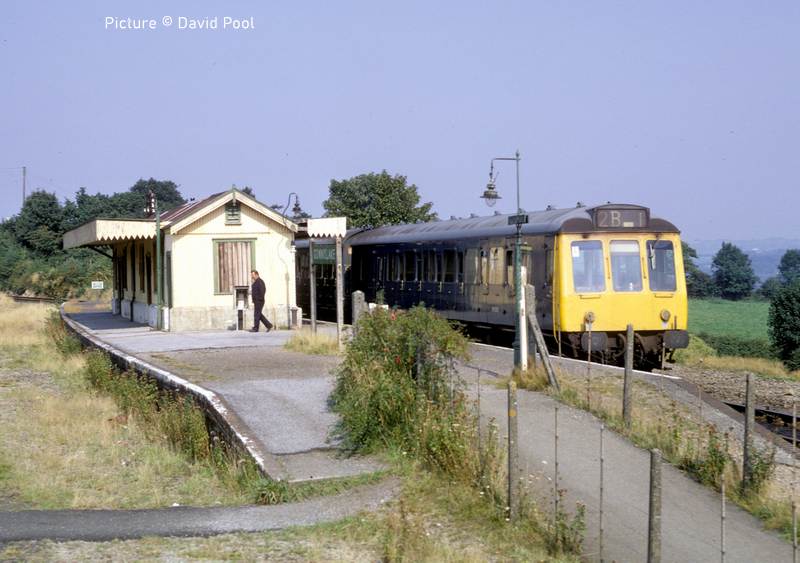
The line to Callington had been closed in 1966 beyond Gunnislake, which then became the terminus. Gunnislake station in 1971 was another neglected station, although the lighting seems to have survived. It is somewhat surprising that today there are trains from Gunnislake to Plymouth every two hours, using Great Western Class 150 units. (dp 3184).
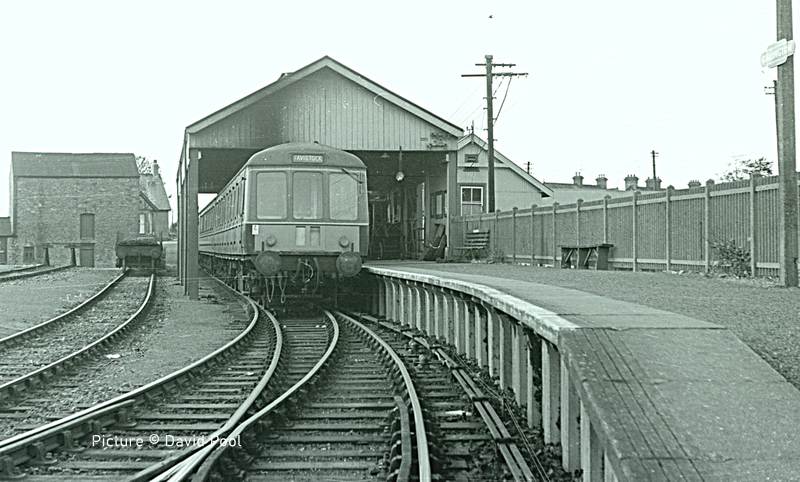
I had visited Callington seven years earlier on 18 September 1964, where a Class 116 dmu W51153 was waiting to depart for Tavistock via Bere Alston. Callington station was one mile North of the town, and was 20 miles from Plymouth by rail, the journey taking more than one hour. The opening of the Tamar road bridge at Saltash in 1961 had provided a main road from Callington to Plymouth, five miles shorter than the rail route, so the closure of the station had been inevitable.
Home page | Archive | Previous Notice Board